November New Releases
Check out the new books releasing this month from Basic Books!
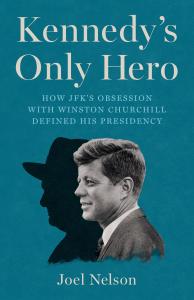
The surprising story of how John F. Kennedy’s obsession with Winston Churchill defined his life, transformed his politics, and helped elevate him to the nation’s highest office.
“A fascinating and discerning exploration of how one iconic twentieth-century leader helped shape the rhetoric and political persona of another.” —Fredrik Logevall, author of JFK
Winston Churchill remains one of the modern age’s most revered leaders. His life has been the subject of decades of mythmaking and scrutiny, and yet few know the powerful sway he had over another twentieth-century political icon—John F. Kennedy. Drawing on deep wells of unpublished archival material, Kennedy’s Only Hero uncovers Kennedy’s obsession with Churchill, whose career, policies, writings, and even daily habits profoundly shaped the future president.
Kennedy discovered Churchill’s books as a teenager and by his early twenties had become an unswerving believer in his brilliance. Under Churchill’s influence, Kennedy rejected his own youthful isolationism and adopted the approach to national and international politics that propelled him to the presidency. Although they would not meet until late in their lives, Churchill’s influence on Kennedy’s campaign tactics, speeches, and worldview was overwhelming. Kennedy’s conviction in the power of peace through strength, his faith in summits, his understanding of the importance of rhetoric, and his deep commitment to service and global engagement—all came from Churchill.
Kennedy’s Only Hero is an enlightening and deeply human story of an admiration and aspiration that changed the course of history.
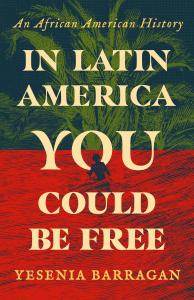
A hemispheric history of how free and fugitive antebellum African Americans sought freedom in Latin America.
“Compelling, beautifully written.” —Greg Grandin, author of America, América
“A game changer of a book.” ―Manisha Sinha, author of The Rise and Fall of the Second American Republic
Fifty years before the United States went to war over the issue, Chile abolished slavery. Colombia followed in 1821, and Mexico soon after. Black Americans took note. As plantation slavery terrorized their communities, Latin America emerged as the place they could be free.
Many have written about the Underground Railroad and northward migration to Canada, but for thousands of African Americans, freedom lay to the south. Abolitionists from Boston to San Antonio celebrated anti-slavery efforts in Latin America.
Freed and fugitive slaves began to see the region as a viable place to migrate, a land where they could find stability, safety, and opportunity. Some went on their own initiative. Others were motivated by organized political movements, like a Lincoln-backed colony in Panama and hotly debated proposals for mass emigration to Central America.
Drawing on travelogues, runaway slave ads, and hundreds of other archival sources across the Americas, Yesenia Barragan rewrites conventional histories of slavery in the antebellum era to prove that emancipation was a hemispheric effort. Eloquent and cutting-edge, In Latin America You Could Be Free is a powerful account of how African Americans pursued freedom in the darkest of circumstances.
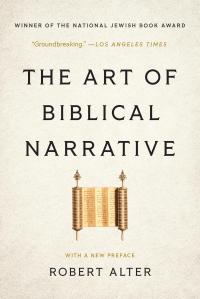
From the celebrated translator of the Hebrew Bible, Robert Alter, the classic book on the Bible as literature, now updated with a new preface.
“A groundbreaking study that encourages us to look beneath the theological surface of the biblical text to glimpse its beating heart.” —Los Angeles Times
Winner of the National Jewish Book Award
In The Art of Biblical Narrative, renowned critic and translator Robert Alter radically expands our view of the Bible by recasting it as a work of literary art deserving studied criticism. Alter describes how the Hebrew Bible’s many authors used innovative literary techniques—from dialogue to artful repetition to recurrent motifs—to tell one of the greatest stories of all time: the revelation of a single God. In so doing, Alter shows, these writers reshaped not only history, but also the art of storytelling itself.
Now updated with a new preface, The Art of Biblical Narrative is an indispensable contribution to biblical and literary scholarship alike.

From a renowned literary scholar, the definitive guide to the poetry of the Hebrew Bible, updated with a new preface.
“Intelligent, precise and exciting.” —New York Times Book Review
In The Art of Biblical Poetry, renowned literary scholar Robert Alter radically expands the horizons of biblical scholarship by recasting the Bible as not only a human creation, but a work of literary art deserving studied criticism. In this companion to the classic The Art of Biblical Narrative, Alter takes his analysis beyond narrative craft to investigate the distinctive workings of Hebrew poetry in the Bible. With pathbreaking analysis of biblical poetry’s structure and function, Alter reveals new layers of meaning in the Hebrew Bible’s range of poetic genres.
Updated with a new preface reflecting on how Alter’s understanding of biblical poetics has evolved since translating the full Hebrew Bible, The Art of Biblical Poetry is an indispensable contribution to biblical and literary scholarship alike.
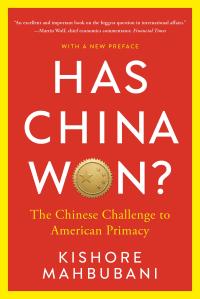
From a former president of the United Nations Security Council, an authoritative look at the US, China, and the defining geopolitical contest of the twenty-first century.
“An excellent and important book on the biggest question in international affairs: how will the relationship between the US and China evolve?” —Martin Wolf, chief economics commentator, Financial Times
China and the United States are world powers without serious rivals. They eye each other warily across the Pacific. They vie for the allegiances of other major nations and an ever-larger share of the global GDP. They tout opposing values and ideologies. A massive geopolitical contest is underway.
Drawing on his decades of experience in diplomacy and geopolitical strategy, Kishore Mahbubani offers a bracingly honest appraisal of the strengths and weaknesses of these ambitious and eccentric superpowers—and a clear-eyed assessment of their best path forward.
Updated with a preface reassessing the US-China power struggle from the vantage point of the second Trump presidency, Has China Won? is the definitive guide to the deep fault lines between the two countries.
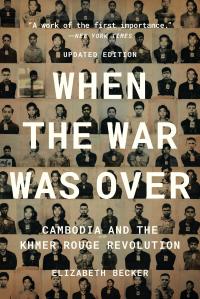
The authoritative history of the Cambodian Revolution and its aftermath.
“An impressive feat of scholarship and reporting: intelligent, measured, resourceful.” —Washington Post
The day they took over Cambodia in 1975, the Khmer Rouge closed the borders and drove the citizens out of towns and cities into the countryside, where they were forced to labor endlessly in the fields. Torture, terror, starvation, and death became routine. The intelligentsia was exterminated. Ultimately, almost two million people—nearly a quarter of the Cambodian population—were killed in one of the twentieth century’s worst crimes against humanity.
When the War Was Over is award-winning journalist Elizabeth Becker’s masterful history of the Cambodian nightmare, from its origins in French colonialism and the Vietnam War, to dictator Pol Pot’s political education in Paris, to the killing fields across Cambodia. In this newly updated edition, Becker lays out the impact of the Khmer Rouge genocide on modern Cambodia.
Comprehensive, compassionate, and propulsive, When the War Was Over illuminates the darkness of Cambodia with the intensity of a bolt of lightning.
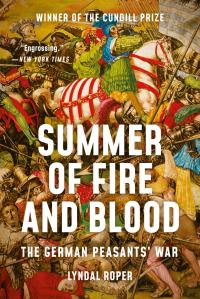
Winner of the Cundill Prize
From a prize-winning historian, the definitive account of the sixteenth-century uprising that revolutionized Europe.
“A balanced, comprehensive survey of the uprising, gripping in its narrative and perceptive in its assessments, making it easily the most accessible study in English for a general readership.” –Financial Times
The German Peasants’ War was the greatest popular uprising in Western Europe before the French Revolution. In spring 1525, it swept across Germany with astonishing speed as thousands of people massed in armed bands to demand a new and more egalitarian order. But they proved no match for the forces of the lords, who put down the revolt by slaying somewhere between seventy thousand and one hundred thousand peasants in just over two months.
In Summer of Fire and Blood, the first history of the German Peasants’ War in a generation, historian Lyndal Roper exposes the rebellion’s far-reaching ramifications. Though the war’s victors portrayed the uprising as naive and inchoate, Roper reveals a mass movement that sought to manifest the radical potential of the Protestant Reformation.
Through the stories of the people themselves, Summer of Fire and Blood reconstructs the thrilling, tragic saga of the peasants’ fight to change the world.
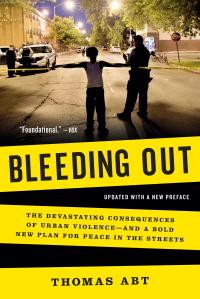
A powerful proposal for fighting violence in America.
“[Abt] presents a vision for dealing with urban violence by fundamentally rethinking how law enforcement and other government resources are used … Bleeding Out makes a compelling case that there is a path forward.” –Vox
Violent crime remains one of the most divisive and allegedly intractable issues of our time. But we already possess the tools necessary to stem violence on the streets of our cities.
Coupling the latest social science with firsthand experience as a crime-fighter, scholar Thomas Abt proposes a relentless focus on violence itself—not guns, gangs, or drugs. Because violence clusters among small groups of people and places, it can be predicted and then prevented using smart-on-crime strategies that don’t require new laws or big budgets. Curbing such crime can unlock the potential of our cities’ most disadvantaged communities.
Widely read and deeply influential—and now updated with a new preface on crime-fighting successes and challenges in the wake of the pandemic—Bleeding Out offers practical solutions to the national emergency of crime and violence that challenges readers to demand action.
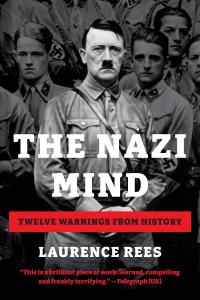
From an award-winning historian, a fresh analysis of the rise of Nazi extremism, how such thinking gained popularity, and why it is vital to fight burgeoning extremist movements today.
“Extremely timely … Rees divides his book into ‘Twelve Warnings,’ or red flags to look for in governments and societies today. Although some seem mercifully historic, the majority are disturbingly relevant.” —Air Mail
Why did commandants of concentration camps willingly—and enthusiastically—oversee mass murder? How could the SS commit the crimes they did? What made ordinary Germans tolerate the removal of Jews? In The Nazi Mind, historian Laurence Rees seeks answers to the most perplexing questions surrounding World War II and the Holocaust.
Delving into the darkness, Rees explains how and why these people were capable of committing some of the worst crimes in history. From the late 1910s to the 1940s, Rees charts the rise and fall of Nazi mentalities—including the conditions that allowed this violent ideology to flourish and the sophisticated propaganda effort that sustained it.
Using previously unpublished testimony from former Nazis and those under the Nazi system, and in-depth insights from new psychological research, The Nazi Mind brings fresh understanding to one of the most appalling regimes in history.
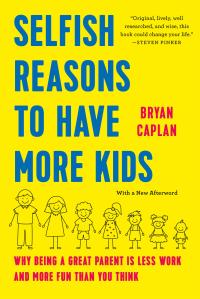
An acclaimed economist reveals why good parenting is far less stressful—and far more fun—than you think.
“Cheery and intellectually hones … The bedrock of Caplan’s argument is solid: Modern parenting is insane.” —Wall Street Journal
We’ve needlessly turned parenting into an unpleasant chore. Parents invest more time and money in their kids than ever, but the shocking lesson of recent twin and adoption research is that upbringing is much less important than genetics. The big lesson for parents: Mold your children less and enjoy your life more. Your kids will still turn out fine.
Now updated with a new afterword, Selfish Reasons to Have More Kids asks the big questions: How can parents be happier? What can they change—and what should they just accept? Which worries can parents safely forget? Drawing on economics and scientific research, Caplan answers all these questions and more.
Since its initial publication, this modern classic has inspired countless parents to embrace its pro-child, pro-fun philosophy—and even to grow their families. You will never see kids or parenthood the same way again.
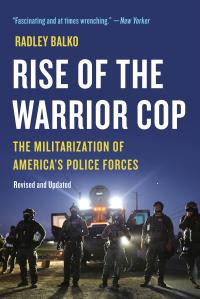
The groundbreaking history of how police forces went to war with the American public, now updated to encompass the massive shift toward immigration enforcement and ICE raids.
“Fascinating and at times wrenching.” —The New Yorker
Recent years have seen tanks rolling through the streets of American cities, masked officers snatching parents from their children at school pickups, and chemical munitions deployed against peaceful citizens at close range. Law enforcement routinely confronts the public with violence on a scale that would have been scandalous just decades ago. In Rise of the Warrior Cop, investigative reporter Radley Balko uncovers how police were transformed into an occupying army. The wars on crime, drugs, and terror each empowered police forces at the expense of civil liberties. And under Trump, these powers have expanded in terrifying new ways.
Rise of the Warrior Cop is a fascinating, frightening narrative that shows how American police officers ended up on a collision course with the values of a free society.